
العمل الإبداعي
يعتمد المهندس المعماري كينجو كوما وشركاؤه على ColorEdge في تصميم الاستاد الوطني الجديد في طوكيو
أحدثت طابعة ColorEdge CS2731 من EIZO تغييرات جذرية في بيئة إنتاج فريق CG في شركة Kengo Kuma and Associates
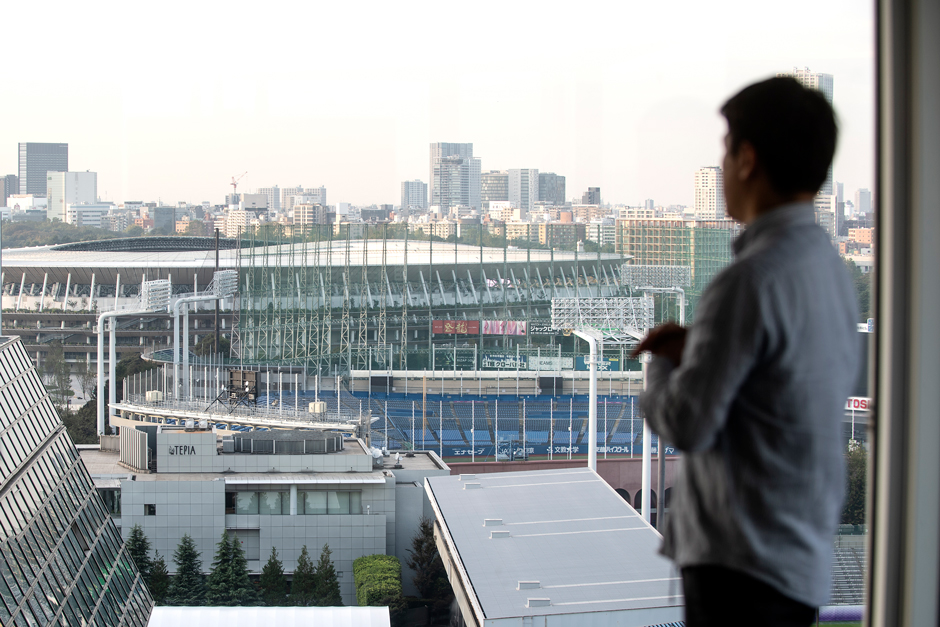
منظر للملعب الوطني الجديد من مكتب كينجو كوما وشركائه
|
تعد شركة Kengo Kuma and Associates شركة معمارية معروفة بتصميماتها المجددة لمسرح Kabukiza في Ginza ومتجر Mitsukoshi في Nihonbashi، والاستاد الوطني الجديد، حيث تُقام أشهر الأحداث والاحتفالات الرياضية في العالم. تم تصميم مبانيها ببراعة لتندمج مع البيئة المحيطة والثقافة. كما تتمتع هذه الشركة المعمارية الرائدة الشهيرة بميزة فريدة إلى حد ما: فهي تمتلك فريقًا داخليًا للرسومات الحاسوبية. أضاف فريق الرسوم الحاسوبية مؤخرًا ثماني شاشات ColorEdge CS2731 إلى سير العمل الخاص بهم. تحدثنا مع رئيس مكتب التصميم، Tomohiro Matsunaga، الذي أخبرنا عن تجاربهم مع الشاشات. |
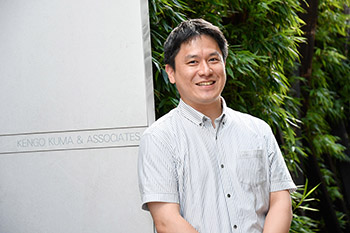
توموهيرو ماتسوناجا (كينجو كوما وشركاه) |
إضافة نسيج إلى تصميمات المباني ثلاثية الأبعاد
|
مع اعتماد BIM (نمذجة معلومات البناء) مؤخرًا، شهد مجال الهندسة المعمارية انتقالًا سريعًا إلى 3DCG. ولم تكن شركة Kengo Kuma and Associates استثناءً: يستخدم فريق التصميم الخاص بهم النمذجة ثلاثية الأبعاد في عملية التصميم. وقد أضافوا مؤخرًا شاشات EIZO ColorEdge إلى سير عملهم، ليس لفريق التصميم، ولكن لفريق CG. إذن، ماذا يفعل فريق CG في شركة Kengo Kuma and Associates؟ |
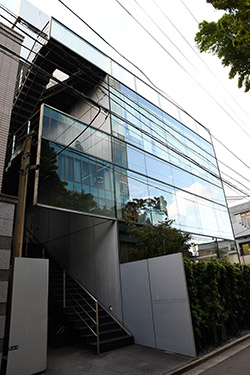
مكتب كينجو كوما وشركائه |

توموهيرو ماتسوناجا (رئيس مكتب التصميم في Kengo Kuma and Associates)
Right now, there are eight people on the CG team. For each project handled in-house, the same members on the CG team work with the design staff until the project is complete. Each member of the CG team works on multiple projects simultaneously, so over the course of a given month, a single person will be involved in a considerable number of different projects. According to Matsunaga, “We start by producing concept renderings for competitions. If we win a competition, we begin work on a more detailed design, and keep producing architectural renderings until just before the building is complete, so a member of the team can be involved in a given project for a pretty long time.” For instance, when Matsunaga handled BIM work for the V&A Dundee design museum in Scotland, that project took about eight years from start to finish.
The Need for Color Management
The CG team at Kengo Kuma and Associates added CS2731 monitors to their workflow in June 2019. Before then, the CG team had no real consistency between their monitors and other equipment, leading to different work environments for each person. “Because a single person from the CG team would be involved in each project, there wasn’t much need for collaboration within the CG team itself, so we didn’t really notice the differences between our work environments,” noted Matsunaga in retrospect.
However, in recent years, architectural renderings have come to be used more and more on the web or in advertisements, and clients began pointing out color mismatches increasingly often. As Matsunaga put it, “Based on your work on your own monitor, you wouldn’t think there were any problems with the colors, but when the clients looked at it on their own computers, the colors would be completely different, so we had to do more and more revisions.” The team wasn’t particularly familiar with color management at the time, and had no real means of ensuring that their colors matched. As a result, there was a strong desire for monitors that would be able to display colors accurately, based on a color standard.
It was then that Matsunaga tested an EIZO ColorEdge monitor, which had attracted his notice some time before. “I was stunned by how beautiful the picture was — it was like no screen I had ever seen before,” recalled Matsunaga. After they tested a variety of monitors, the ColorEdge earned high acclaim from the entire team; the CS2731 had just come out, so they decided the time was right to officially make these monitors a part of their workflow.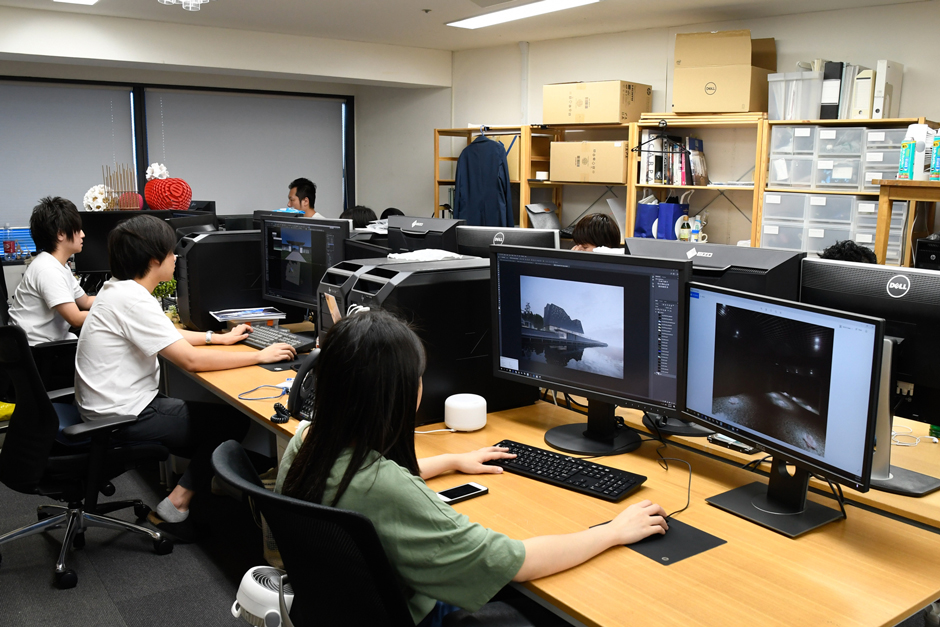
The CG Team Hard at Work
Accurate Reproduction of Even Fine Gradations on Wood
“By introducing these CS2731 monitors, we were able to achieve an internal standard for accurate colors,” explained Matsunaga. “For example, if we’re using wood for timberwork, the wood isn’t all going to be the exact same color. We’ve always made sure to introduce slight variations in the wood in our CG work, but before, most of the colors would lose their detail in printouts, so it wasn’t possible to tell. With the CS2731, though, we get accurate color reproduction during our production work, even for fine gradations, which makes the work a lot more satisfying.” In addition, the ColorEdge has outstanding reproduction of gradations in dark areas, excellent for displaying night scenes or showing finely detailed texture even in shadows.
The display has also proven to be extremely valuable when trying to show architectural renderings in the best possible light for competitions. According to Matsunaga, “For overseas competitions, it’s especially important — the impression given by a rendering can vary tremendously depending on how delicate gradations are reproduced, like the color of the sky during magic hour in northern Europe. Whether you can reproduce those sorts of subtle gradations or not is a big deal.”
Having an internal standard for accurate colors gave the team more confidence in their work and led to a significant reduction in revision requests from clients. As Matsunaga told us, “Cutting down on needless back-and-forth helped speed up our production work. Combined with the efficiency improvements that came from switching to larger screens, it felt like we could handle almost twice as much work as before.” The CG team is involved in producing architectural renderings up until buildings are nearly completed, which inevitably leads to a great deal of work. Being able to reduce the amount of work that needed to be redone due to revision requests was immeasurably valuable.
The team also used to work with a pair of HD monitors from another company at each desk, but because the color and brightness on these monitors couldn’t be finely calibrated, they would cause severe eyestrain after hours of work. After switching to the CS2731 as the main monitor, the team noted that they hardly experienced eyestrain, even after a full day of looking at the monitor — so the change led to health benefits as well.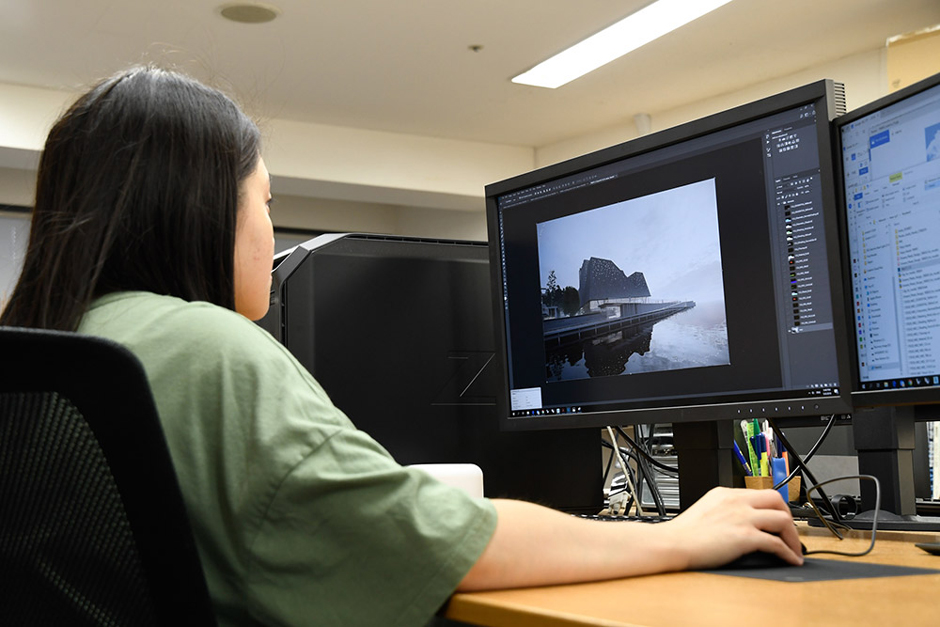
Today, the members of the CG team each use a CS2731 as their main monitor for CG work.
يبلغ حجم شاشة CS2731 27 بوصة، وهي شاشة كبيرة إلى حد ما، مما يجعلها رائعة لأعمال التصميم أيضًا: يمكنها عرض صفحة A3 كاملة بالحجم الفعلي، ودقة WQHD (2560 × 1440) تجعل من السهل رؤية التفاصيل الدقيقة. وأشار ماتسوناجا إلى أن "الشاشة 4K بحثنا أيضًا في شاشات 4K، لكننا وجدنا أن 4K كانت أكثر مما نحتاجه حقًا لعملنا، لذا فإن شاشة CS2731 كانت مناسبة لنا تمامًا. ولأن الشاشة نفسها كبيرة كما هي، فإن لوحات الأدوات لا تنتهي بعرضها بحجم صغير جدًا، لذا من السهل التحقق من تفاصيل ما نعمل عليه. إنه الحجم المثالي". يمكن للشاشة أيضًا عرض مجموعة واسعة من الألوان، تغطي 99% من مساحة ألوان Adobe RGB، ويتم معايرة كل وحدة على حدة قبل مغادرة المصنع. يتم إجراء هذه المعايرة بعد خضوع كل وحدة لتشغيل تجريبي لتثبيت عرضها، لضمان اتساق الألوان والسطوع عبر الشاشة بأكملها، لشاشة نالت استحسانًا استثنائيًا لعرضها الموثوق للصور.
تستخدم CS2731 معايرة الأجهزة: باستخدام مستشعر معايرة الألوان (متوفر كملحق إضافي) والبرنامج المجاني المضمن، يمكن إعادة معايرتها بانتظام لضمان دقة الألوان لسنوات قادمة. في Kengo Kuma and Associates، قاموا مؤخرًا بتنفيذ إصلاح كبير من خلال توحيد بيئات شاشاتهم، لذلك يخططون للبحث في تعليم الفريق كيفية ومتى يتم إجراء المعايرة في المستقبل - وهي علامة على ثقتهم في معايرة المصنع على هذه الشاشات. يبدو أن CS2731 من المرجح أن تكون بمثابة خطوة كبيرة إلى الأمام لجهودهم المستقبلية أيضًا.
هذه ترجمة من اليابانية لمقال نُشر بواسطة CGWORLD.jp في 7 نوفمبر 2019 ( الرابط ). النص الأصلي بقلم كازويا هاياشي. الصور بواسطة يوكا كاني وميتسورو هيروتا.
المنتجات المنشورة
شكر خاص لشركة كينجو كوما وشركائها على تعاونهم.