
دراسات الحالة
ورشة نقل الصبغة - بيتينا هانيكي
على مدى عقود من الزمان، كانت عملية نقل الصبغة تجسيدًا للمطبوعات الملونة الرائعة الغنية بالتباين والتي تدوم طويلًا والتي كانت الخيار الأول، خاصة عند إنتاج صور عالية الجودة. من خلال رقمنة عملية نقل الصبغة جزئيًا، أعادت Dye Transfer Atelier – Bettina Haneke إحياء عملية كادت أن تصبح فنًا ضائعًا، ونجحت في إدخالها إلى القرن الحادي والعشرين.
نقل الصبغة – عملية منسية تقريبًا تعود إلى الواجهة
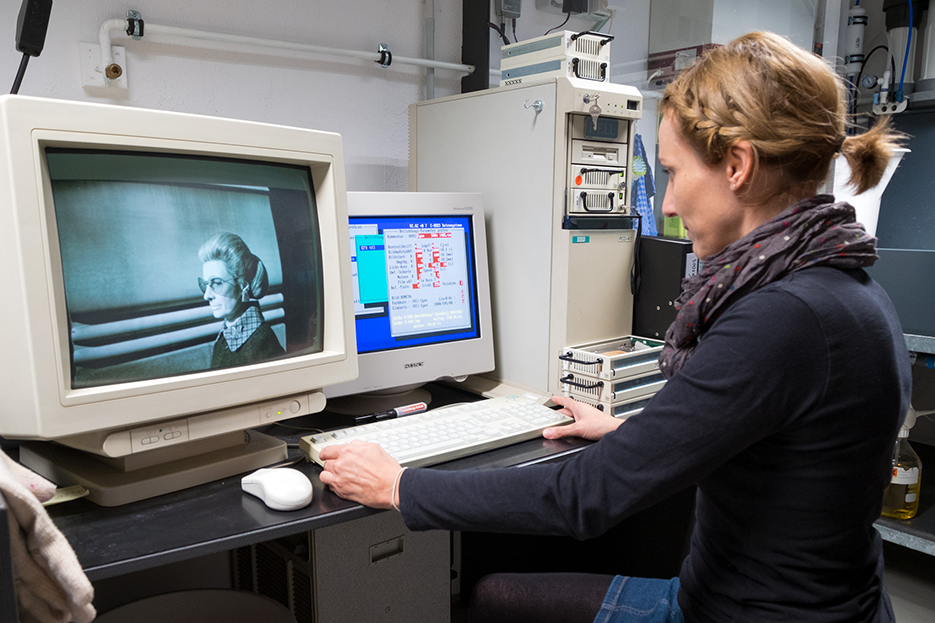
توقفت شركة كوداك بشكل أساسي عن إنتاج المواد المستخدمة في عملية نقل الصبغة من يوم لآخر في عام 1992، حيث فقدت زخمها تدريجيًا مع ظهور معالجة الصور الرقمية في أوائل التسعينيات. كانت العملية ميتة في الأساس بعد بضع سنوات. بدأت شركة Dye Transfer Atelier - Bettina Haneke، ومقرها في سيتينسن بألمانيا، في تقديم هذه العملية مرة أخرى في عام 2003، وبذلك تلبي احتياجات العديد من الفنانين والمعارض والمقتنين والمتاحف في جميع أنحاء العالم.
الجمع بين عملية الطباعة التناظرية ومعالجة الصور الرقمية
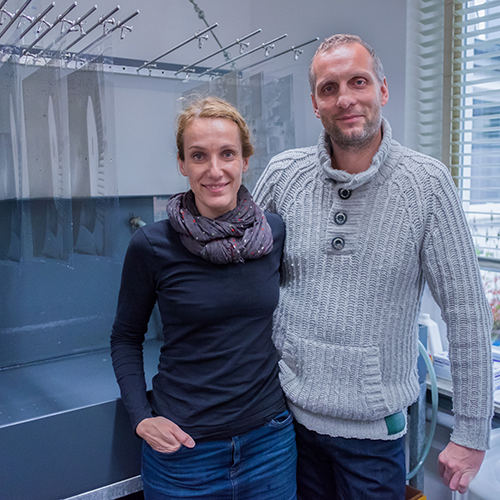
لقد انضم السيد والسيدة هانيكي، اللذان يديران Dye Transfer Atelier – Bettina Haneke، إلى عملية الطباعة التناظرية مع معالجة الصور الرقمية وإدارة الألوان في مرحلة التنفيذ، مما أحدث تغييرًا جذريًا في الفكر التقليدي في سير العمل. يشكل الملف الرقمي المثالي الأساس لكل طباعة نقل صبغي. إذا كان هناك سلبي متاح للصورة، وهو ما يحدث غالبًا في عالم الفنانين (كما هو الحال مع العديد من عملائهم)، فسيتم أولاً رقمنة السلبي باستخدام ماسح ضوئي عالي الأداء.
إدارة الألوان أمر ضروري
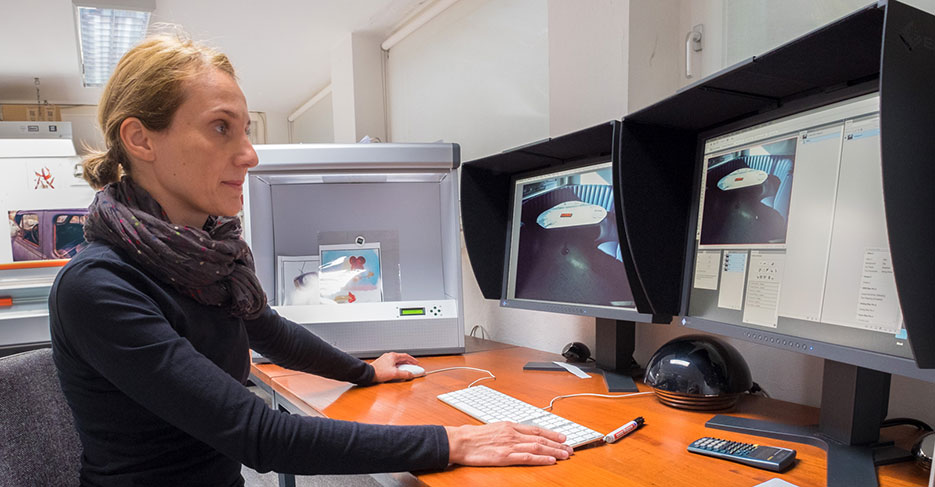
تتم معالجة البيانات الرقمية باستخدام شاشتين EIZO ColorEdge CG277، حيث يتم تحسينها وفقًا لنظام إدارة ألوان صارم للغاية. بعد ذلك، يتم تحقيق التأثير المطلوب للصورة من خلال عملية تناظرية. ويؤكد إيجبرت هانيكي: "إدارة الألوان مهمة للغاية بالنسبة لنا". "لقد قمنا للتو بالترقية إلى شاشات EIZO الجديدة المزودة بمستشعر تعديل مدمج. يتيح لنا ذلك الاطمئنان إلى أن شاشاتنا سيتم ضبطها دائمًا على النحو الأمثل، مما يلغي الحاجة إلى التعامل معها. من المهم جدًا بالنسبة لنا أن تصور الألوان الموجودة على الشاشة الألوان الموجودة في الطباعة النهائية بشكل موثوق".
يتم ضمان الإنتاج من خلال المواد المنتجة داخليًا
Egbert Haneke explains, “It was pretty much common knowledge how the dye transfer process works. However, we needed to perform a number of experiments in order to understand how we could repackage this age-old process. Actually, we started at the beginning. We could still fall back on original materials manufactured by Kodak, such as films, papers, and chemicals, but we quickly realized: We needed to develop a new material ourselves if the dye transfer process were to have a real future.” The couple has used materials that are produced exclusively for them since 2005, which include print films, barium sulfate paper, chemicals, and dyes.
Imaging using DOS computers based on period hardware
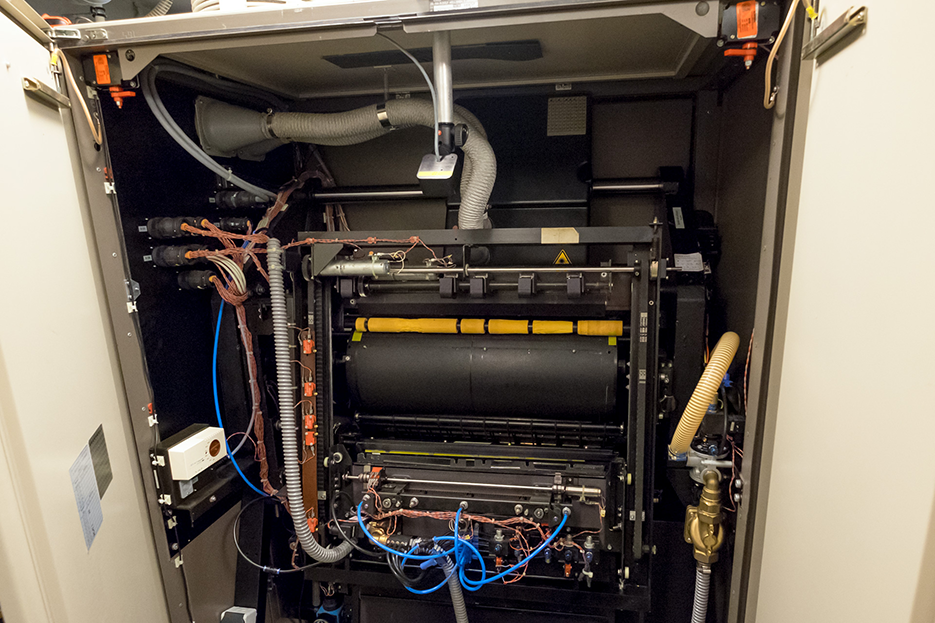
The printing matrices needed were exposed using an old HELL laser imaging unit. Since production of these units was discontinued many years ago, the computer that controls the laser imaging unit is relatively old – a 486-based DOS computer. For this reason, the Hanekes also maintain a large supply of replacement units and parts for the legacy machines in order to ensure their operations for the foreseeable future.
Craftsmanship for small series runs
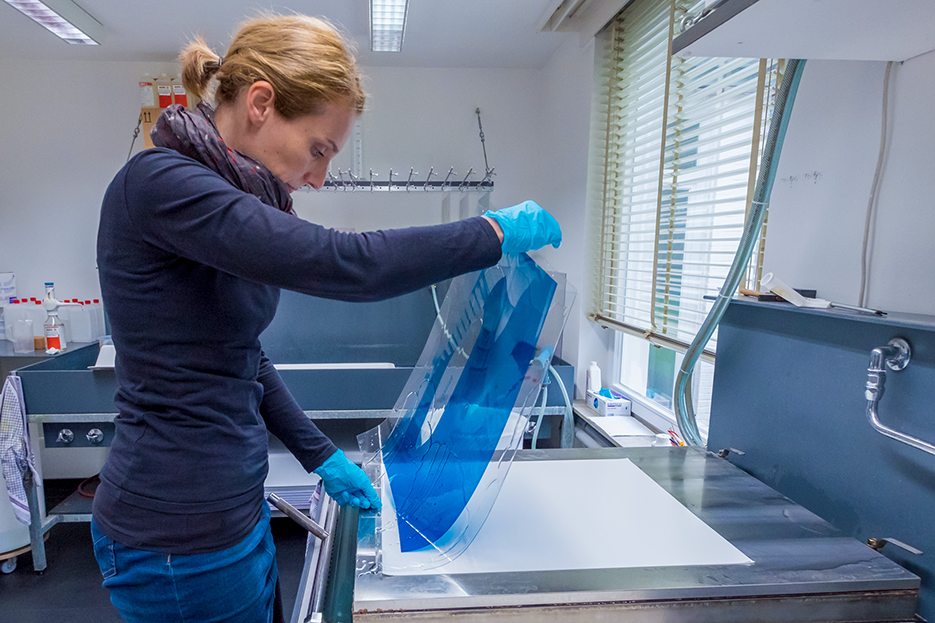
Matrix films that have been specially manufactured for Dye Transfer Atelier – Bettina Haneke are used with the laser imaging unit to produce the three printing matrixes, which are used for printing later on. Only three printing matrices for cyan, magenta, and yellow are needed in conventional tri-color dye transfer printing, in contrast to traditional four-color printing. The film is developed after imaging and the exposed gelatins are hardened. The unexposed parts are washed off, which results in gelatin relief on the polyester. In this manner, the print film can absorb more or less dye depending on the thickness of the remaining gelatin layer. In the next step, the print films are placed in the color baths of the cyan, magenta, and yellow dyes. The gelatin layer of the films absorbs the dyes successively. After one hour, the three print films are ready to be rolled onto the high-quality and heavy barium sulfate paper one after the other. In the process, the colors of the motive made up of the three primary colors are built up in the paper’s emulsion coating. The films are washed after printing and are available for a limited number of reprints. However, why is dye transfer printing so appealing compared to traditional picture enlargements or ink-jet printing?
Worldwide demand for it from artists, galleries, and museums
لا تُعَد المطبوعات التي يتم نقلها بالصبغة أشياءً يتم إنتاجها بكميات كبيرة ويمكن إعادة إنتاجها إلى ما لا نهاية. إنها مطبوعات فريدة من نوعها ينتجها حرفيون: على الرغم من كل العمل الدقيق، إلا أن المطبوعات تختلف قليلاً. وقد أصبح الفنانون والمعارض والمتاحف يقدرون هذه الفردية، جنبًا إلى جنب مع الجانب ثلاثي الأبعاد الفريد والجودة غير المسبوقة للطباعة الناتجة. أصبحت سيتينسن مدينة تنتج جودة حرفية للطبعات الفردية والطبعات الصغيرة التي تثير إعجاب العملاء والزبائن في جميع أنحاء العالم.
بيتينا وإيجبرت هانيكي